
India has no plans to ration fuel supplies despite ongoing disruptions in global energy markets, according to a top oil ministry official. The country has maintained adequate inventories of crude products and LPG while diversifying imports to manage supply risks.

One of the most uncivilised characteristics of this war has been the total disregard for international law and the laws of armed conflict, asserts Vice Admiral Biswajit Dasgupta (retd).

'The bigger unknown remains global geopolitics, which is inherently unpredictable, including developments in our neighbourhood.' 'Another concern is the increasing tilt of government finances towards welfare subsidies, especially at the state level.' 'This could constrain capital expenditure, which is critical for long-term growth.'

Infosys co-founder Kris Gopalakrishnan urges Indian startups to focus on deep technology and advanced manufacturing to ensure strategic autonomy.

Chinese President Xi Jinping warned that the Taiwan issue could lead to clashes and even conflicts between China and the United States if not handled properly. He emphasised the importance of safeguarding peace and stability across the Taiwan Strait for stable relations.

The Reserve Bank of India's (RBI) cap on banks' forex positions provided only a temporary boost to the rupee, with the currency quickly reversing gains and breaching the 95-per-dollar mark due to persistent underlying pressures.

In the present hyper-connected world, there are many domestic and global factors that affect financial markets. Of them, the most powerful and often least predictable are geopolitical events, which often boil down to one diplomatic headline.

Escalating geopolitical tensions in West Asia are prompting investors with exposure to Dubai's real estate market to reassess their portfolios. And, in this rejig, India is emerging as a stable destination for capital investment and long-term growth.

Indian benchmark equity indices, Sensex and Nifty, experienced a decline in early trade, ending a three-day rally, primarily due to heavy selling in IT stocks and concerns over prolonged instability in West Asia.

'Markets never fully lose hope. But an important shift could come if the Strait remains closed -- moving from high prices to no prices.'

The Indian rupee depreciated by 52 paise to settle at 93.35 against the US dollar, driven by failed US-Iran peace talks, surging crude oil prices due to a potential US blockade of Iranian ports, and a global flight to the greenback. This geopolitical uncertainty is also leading to foreign capital withdrawal from domestic equities.

Indian equity benchmark indices, Sensex and Nifty, tumbled nearly 2 per cent for the fourth consecutive session, driven by elevated crude oil prices, escalating US-Iran tensions, unabated foreign fund outflows, and a depreciating rupee.
Indian equity benchmark indices, Sensex and Nifty, tumbled nearly 2 per cent for the fourth consecutive session, driven by elevated crude oil prices, escalating US-Iran tensions, unabated foreign fund outflows, and a depreciating rupee.

The Indian rupee crashed to a record closing low against the US dollar due to rising global crude oil prices, a strengthening dollar, and geopolitical tensions in the Middle East.

Indian stock markets tumbled sharply with the Sensex falling 800 points and nearly 4 lakh crore wiped out in a single session. Here are the 6 key factors, including rupee weakness and global cues, behind the crash.

US President Donald Trump concluded his Beijing summit with Chinese President Xi Jinping, describing it as 'incredible' and highlighting 'fantastic trade deals' and a 'very strong' relationship between the two leaders.

Analysts predict that developments in West Asia and their impact on crude oil prices will heavily influence investor sentiment in the upcoming week. Global market trends, foreign investor activity, and rupee-dollar movement will also play a role.

External Affairs Minister S Jaishankar stated that India has demonstrated resilience in the face of recent global shocks, including the conflict in West Asia, while speaking at the convocation ceremony of IIM Raipur. He emphasised the importance of building national capabilities to de-risk and develop leverage in a changing global order.

The Indian rupee weakened against the US dollar due to sustained foreign fund outflows and uncertainties in West Asia, although lower crude oil prices and a positive opening in domestic equity markets limited the losses.

Indian oil marketing companies are incurring significant losses, selling petrol at a Rs 14 per litre loss and diesel at Rs 18 per litre, as elevated global crude oil prices, exacerbated by the West Asia crisis, outpace capped retail fuel rates, according to rating agency Icra.

As many as 35 vessels, including cargo carriers and oil tankers, successfully navigated through the strategic maritime chokepoint of the Strait of Hormuz over the last 24 hours, according to Iran's state media reports citing a formal declaration by the Islamic Revolutionary Guard Corps (IRGC) Navy.

'Travellers are considering safer and more stable destinations.'

In crowded Mumbai trains, passengers, despite being crushed and unable to breathe, watch the IPL action on their phones. Oxygen may be optional, but the live score is not.

The Reserve Bank of India (RBI) has announced a record surplus transfer of Rs 2.87 trillion to the central government for FY26, driven by increased income and an expanded balance sheet, despite a reduction in the contingent risk buffer (CRB) to 6.5 per cent.

Indian equity markets experienced a significant downturn, with the Sensex and Nifty plummeting due to rising crude oil prices, geopolitical tensions in West Asia, and continuous foreign fund outflows.

India's organised gold jewellery retail sector is projected to experience a 13-15 per cent year-on-year decline in sales volumes this fiscal, following an 8 per cent drop last year, due to elevated gold prices and a recent import duty hike, according to a Crisil report.

Precious metal prices surged in futures trading, with silver hitting Rs 2.93 lakh per kg and gold nearing Rs 1.68 lakh per 10 grams, driven by safe-haven demand following US-Israel strikes in Iran and retaliatory attacks.
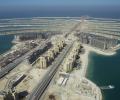
Ongoing geopolitical tensions in West Asia have slowed deal momentum in Dubai's luxury residential market, but Indian high-net-worth individuals (HNIs) are not exiting their marquee assets, with any 'discounted' resale deals attributed to investor liquidity stress rather than geopolitical flight.

S&P Global Ratings has increased India's GDP growth forecast for the next fiscal year to 7.1 per cent, citing private consumption, investment, and exports as key drivers. However, the agency also cautioned that the conflict in the Middle East could strain India's fiscal position due to higher energy prices.

Benchmark Sensex tumbled 1,236 points or 1.5 per cent while Nifty closed near 25,450 on Thursday following an across-the-board sell-off amid escalating geopolitical tensions between the US and Iran.

The Indian rupee saw a significant appreciation against the US dollar following President Trump's suspension of military strikes against Iran and the Reserve Bank of India's decision to maintain its key interest rate. Market sentiment was further buoyed by positive comments from the RBI regarding the health of the banking sector.

The University of Sheffield has announced a major milestone in the push for greener aviation as it produces its first report from testing a new sustainable aviation fuel (SAF). The research is helping support the faster rollout of low-carbon jet fuels.

Gold prices rallied for the third straight day and gained Rs 2,600 to hit a fresh lifetime high of Rs 1,26,600 per 10 grams in the national capital on Wednesday in line with strong global trends amid looming geopolitical uncertainties triggered by the prolonged shutdown of the US government.

Revenue intelligence and customs officers are set to intensify surveillance and increase vigilance on international borders to combat potential gold smuggling following a significant increase in customs duty on gold.

India's GST revenues experienced significant growth in March, reaching pre-tax cut levels, driven by increased imports and domestic sales. The report analyses the impact of tax rate changes and provides insights into future trends and economic stability.

A US-sanctioned tanker carrying Iranian crude oil is heading to India, marking the resumption of oil imports from Iran after seven years.

Despite reporting a weaker-than-expected net loss of Rs 2,536 crore for Q4FY26, largely due to a significant non-cash forex loss, analysts remain optimistic about IndiGo's long-term prospects, citing strong demand trends, a favourable pricing outlook, and strategic cost-control measures.

Foreign portfolio investors (FPIs) withdrew a substantial amount from Indian equities in the first half of March, driven by geopolitical tensions, rupee depreciation, and concerns about crude oil prices.

Occasionally, the silence of the night shift would be shattered by an ear-splitting alarm: 'ALERT, ALERT... This is a security warning.' We were drilled to move away from the windows and avoid the lifts, recalls Krishna Kumar NP, a veteran Dubai-based journalist.

A lesson for India is to clearly define objectives beforehand, so that the adversary or other parties do not attempt to mitigate them midway.
